
Protect Your Business From Employee Theft and Dishonesty
Fidelity Bonds in Texas and Kansas
Even with strong internal controls, employee theft and fraudulent activity can still occur. A fidelity bond helps protect your business from financial loss caused by dishonesty, fraud, or theft committed by employees or volunteers.
Garrett Insurance provides fidelity bond coverage for businesses and organizations across Texas and Kansas, helping protect assets, funds, equipment, and sensitive data.
What Is a Fidelity Bond?
A fidelity bond is a form of protection that covers losses caused by dishonest acts of employees. Unlike a surety bond, which guarantees performance to a third party, a fidelity bond protects your business directly.
Fidelity bonds can help safeguard:
- Money and securities
- Inventory and supplies
- Computer systems and sensitive data
- Client property
- Business equipment
This coverage is especially important for businesses handling cash, financial transactions, retirement plans, or client property.
Types of Fidelity Bonds We Offer
ERISA Bonds
Required for businesses that manage employee benefit plans, ERISA bonds protect against losses caused by fraud or dishonesty involving retirement or benefit funds.
Employee Dishonesty Bonds
Protect your company against theft, embezzlement, or fraudulent acts committed by employees.
Business Service Bonds
Protect clients from theft or dishonest acts committed by your employees while working on a customer’s premises.
Our specialists will help determine the appropriate bond type and coverage limits based on your industry and risk exposure.

Who Needs a Fidelity Bond?
- Contractors working inside client homes or businesses
- Financial professionals and fiduciaries
- Companies managing retirement plans
- Nonprofits and volunteer organizations
- Businesses handling cash or sensitive data
Protect Your Business Assets Today
If you need a fidelity bond in Texas or Kansas, Garrett Insurance can help you secure the right coverage quickly and efficiently.
Contact our team today to speak with a bond specialist and receive a customized quote to protect your business from employee dishonesty and financial loss.





















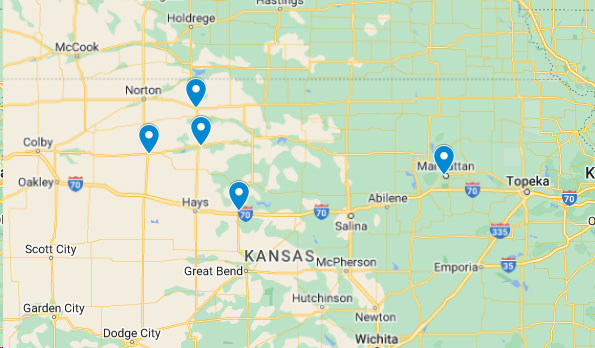
OUR AGENCY LOCATIONS

Frequently Asked Questions
What does Fidelity Bond coverage protect against?
Fidelity coverage generally protects against direct loss caused by dishonest acts of employees, such as theft or embezzlement, subject to the bond form, discovery provisions, and exclusions. Coverage applies when employees act with intent to cause loss to the employer. The bond form and specific insuring agreements determine what types of dishonest acts are covered, how losses are discovered and reported, and any limitations on coverage for acts occurring before the bond period.
What's the difference between Fidelity Bonds and Crime Insurance?
Fidelity Bonds are typically narrower and focused primarily on employee dishonesty, while Crime Insurance is often broader and may cover both employee theft AND third-party crimes like robbery, burglary, computer fraud, and forgery by non-employees. Crime Insurance policies commonly include multiple insuring agreements for various crime exposures. Fidelity Bonds may be sufficient for businesses primarily concerned with employee theft. Businesses needing protection against multiple crime exposures should consider Crime Insurance coverage.
Does my business need a Fidelity Bond?
Any business with employees who handle cash, checks, inventory, or financial accounts should consider Fidelity coverage. It’s especially important for retailers, restaurants, healthcare providers, financial services firms, property managers, nonprofits, and businesses with remote employees handling money. Some contracts, industries, or regulatory requirements may also require fidelity coverage or employee dishonesty protection. For example, ERISA generally requires bonding for persons who handle plan funds or other plan property.
How much Fidelity Bond coverage do I need?
Coverage limits should reflect your potential exposure to employee theft. Consider your annual revenue, cash on hand, inventory value, and number of employees with financial access. ERISA generally requires a bond amount equal to at least 10% of the funds handled, subject to the applicable minimum and maximum limits (minimum $1,000, maximum generally $500,000, though the maximum can be $1,000,000 for plans holding employer securities). Many businesses choose limits of $100,000-$500,000. Higher-risk operations may need $1 million or more.
How much does Fidelity coverage cost?
Fidelity Bond premiums vary based on industry, number of employees, coverage limits, claims history, internal controls, and the specific bond form. Costs can range from $100-$500 annually per $100,000 of coverage for lower-risk businesses, though actual premiums depend on individual risk factors. High-risk industries or businesses with weak financial controls typically pay more. Many carriers offer premium credits for businesses with background checks and strong fraud prevention procedures.
Does Fidelity coverage extend to independent contractors or vendors?
Standard Fidelity Bonds typically cover only W-2 employees, not independent contractors, vendors, or temporary workers. Some bonds may cover certain non-employees only by specific riders or endorsements for an additional premium. If third parties have access to your assets, consider Crime Insurance with Third-Party Crime coverage or request specific endorsements to extend Fidelity coverage to contractors and vendors where available.
What's required to file a Fidelity Bond claim?
To file a claim, you typically must prove: (1) an employee committed a dishonest act, (2) with intent to cause financial loss to you, (3) resulting in direct financial loss, and (4) discovered in accordance with the bond’s discovery provisions. You’ll need documentation like financial records, investigation reports, and proof of loss. Most bonds require reporting suspected dishonesty within a specific timeframe and cooperating with the carrier’s investigation.
OUR PROMISE TO YOU
- We will provide customized solutions and personalized products based on your needs.
- We will be available to you any time so getting important information will be easy for you.
- We will manage your risk as well as any claims that you file.
- We will ease your worry and protect your treasures by transferring identified risks to an insurance product, all the while keeping it simple to understand for you.
We welcome an opportunity to discuss your home insurance needs, so please contact us or give us a call. You can also request a quote if you’re ready to get started.
Let the Garrett Insurance Family give you the Peace of Mind to Focus on What Matters Most to YOU.
TESTIMONIALS
Superior customer service and we’ve been with them for over a decade. They shop the best rates and coverage. We have multiple lines of business through Garrett Insurance and are loyal customers because of their service.
Holly Kallemyn
Walked in and was immediately greeted and directed to an office to discuss changing from my prior property/casualty carrier to see if I could get better rates. Linda was very friendly and knowledgeable. Got quote results promptly and decided to go with new carrier. Linda was available at my convenience to submit the paperwork, and I received my new policies promptly. Will not hesitate to recommend this agency if asked.
Candace Corwin
Great insurance agency !!! I highly recommend them for any of your needs. Be sure to talk to Linda Areolla she’s very thorough knowledgeable and sweet.
Michael Vega
We are very happy with the professionalism of Garrett Insurance. We have been paying for insurance (with many different companies) for over 50 years and we agree, this is the best agency we have dealt with. They are very quick to send an adjuster and handle our claims. They are also most affordable!
Carole Bell
Great service, great local company.
Kyle Bond
Positive: Professionalism, Responsiveness
Eddie Walker
Easy, fast, great service. My number 1 go to for insurance.
Positive: Professionalism, Quality, Responsiveness, Value
Mitchell Davis
Very helpful, good service. Friendly staff
Jay Graves
Trish was so helpful and professional. Great experience setting up health insurance for our company.
Hal Krebs
Very friendly and great with answering my questions. Nice and pleasant atmosphere. Melissa is very nice and courteous. I recommend this company.
Vicki Frost
Very reasonable on insurance and their staff is very helpful and friendly!!
Curt Counts
Garry Stapel
Regina Godinez
Best service. Great customer service. Super fast whatever you need, they’ll make sure you get it! You, ladies, are the best!
Gina Michelle
Positive: Professionalism, Responsiveness
Chelsey Peterson